
Most dental practices doing "some marketing" are not actually growing. They have a website, maybe some Google Ads running, a Facebook page that gets updated occasionally, and a general sense that reviews matter. But new patient numbers stay flat, and it is hard to pinpoint why.
The problem is rarely effort. It is usually that the pieces are not connected.
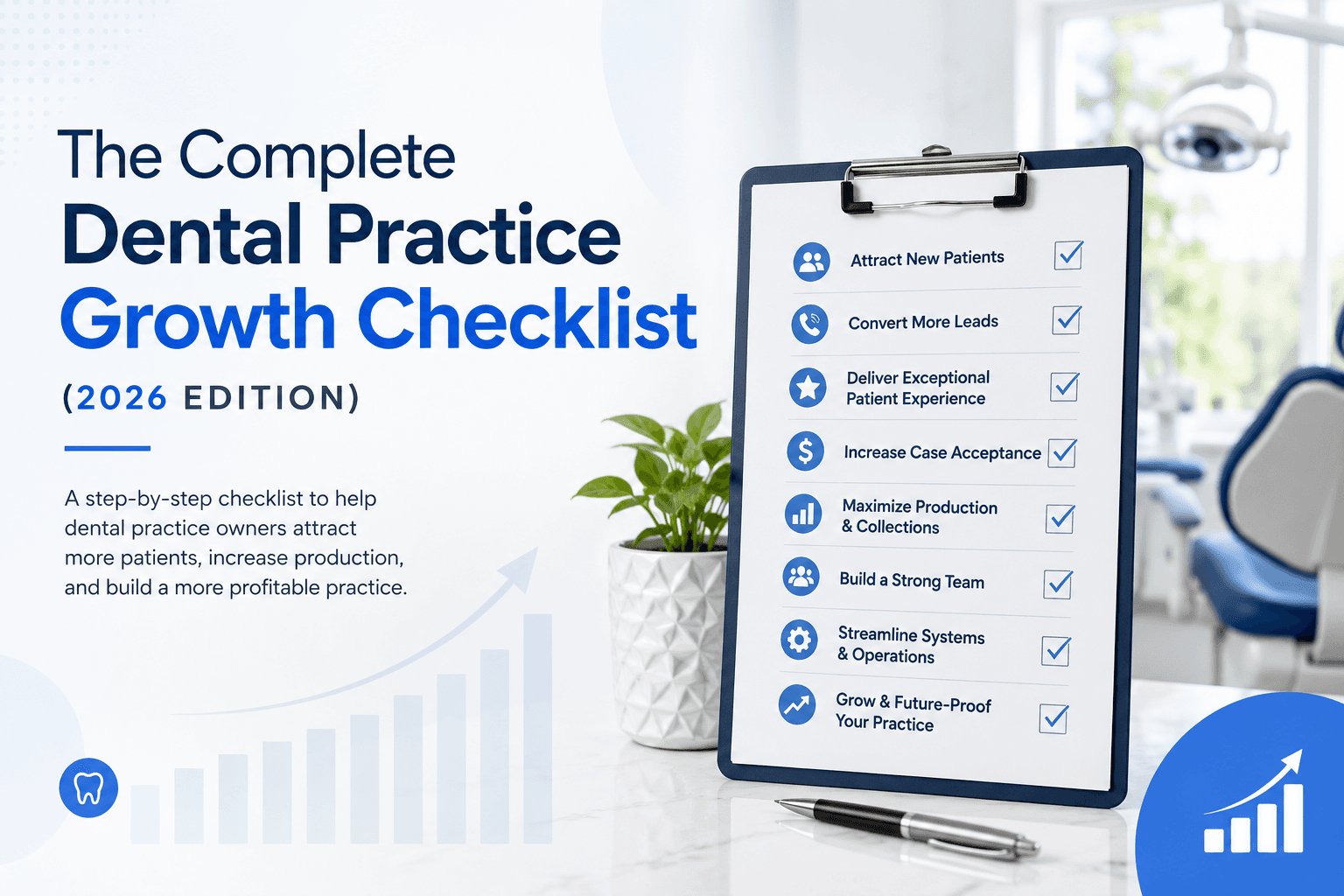
This checklist gives practice owners a structured way to audit every major growth system, from how patients find you online to what happens after their first appointment. Work through each section and note where you have real gaps, not just areas where you could theoretically do more.
Section 1: Google Business Profile
Your Google Business Profile (GBP) is the most visible piece of digital real estate your practice owns. For most local searches like "dentist near me" or "teeth whitening [city]," your GBP appears before your website does.
Checklist:
Profile is claimed and verified
Business name, address, and phone number match your website exactly
Primary category is set to "Dentist" (not a generic health category)
Relevant secondary categories are added (cosmetic dentist, orthodontist, etc.)
Business hours are current, including holiday hours
Services are listed with descriptions in the GBP services section
Photos have been updated within the last 90 days (interior, exterior, team, patient-friendly procedure shots)
New Google reviews are coming in consistently, not just sitting on old ones
Every review has a response, including negative ones
Google Posts are published at least twice per month
The most common GBP mistake is setting it up once and leaving it alone. Google treats active, regularly updated profiles as more trustworthy. A practice with 12 reviews from three years ago will lose map pack visibility to a competitor with 40 recent reviews, even if the older practice has a better website.
According to BrightLocal's Local Consumer Review Survey, 98% of consumers read online reviews for local businesses, and recency is one of the top trust factors they consider.
Section 2: Website Performance and Conversion Readiness
A dental website has two jobs: earn Google's trust so it ranks, and turn visitors into booked appointments. Most practice websites do neither particularly well.
Checklist:
Loads in under 3 seconds on mobile (test with Google PageSpeed Insights)
Mobile experience is clean, with a click-to-call button visible without scrolling
Every core service has its own dedicated page (not one "services" page listing everything)
Each service page targets a specific local keyword (for example: "Invisalign [City]," not just "Invisalign")
The homepage states what you offer, who you serve, and where you are, within the first screen
There is a visible, low-friction way to book or request an appointment on every page
New patient offers are clearly displayed, if you use them
Trust signals are present: credentials, actual team photos, recognizable logos, embedded patient reviews
The site has some active content, a blog or resource section updated at least quarterly
No broken links, outdated staff photos, or expired promotions
One important distinction to keep in mind: an attractive website is not the same as a high-converting one. We see this frequently with practices that invest in a redesign and notice no change in new patient volume. The reason is usually that the underlying structure, keyword targeting, and calls to action were never part of the project scope.
Section 3: Local SEO and Organic Visibility
Paid ads stop the moment you stop paying. Organic visibility through local SEO compounds over time and drives consistent, lower-cost patient acquisition.
Checklist:
Your practice ranks in the top three Google map results for your primary service and city
Your website ranks on page one for at least three to five high-intent local search terms
Your name, address, and phone number (NAP) are consistent across all major directories (Yelp, Healthgrades, Zocdoc, RateMDs, Yellow Pages)
You have backlinks from relevant local sources: dental associations, local business directories, community organizations
Service pages use structured data markup (schema) to help Google understand the page content
You have location-specific content if you serve multiple areas or run multiple locations
Internal linking connects related service pages logically across the site
Most practices underestimate how much NAP inconsistency hurts local rankings. If your address appears differently across 15 directories, such as a missing suite number, an old phone number, or an abbreviated street name, Google's confidence in your business data drops. So does your ranking position.
It is a fixable problem, but it requires a full audit of your directory listings, not just a quick check of the obvious ones.
Section 4: Paid Advertising
Paid ads can accelerate new patient acquisition when the underlying system is ready to convert. Without that foundation, they are expensive and difficult to justify.
Checklist:
You know your cost per new patient acquisition from paid channels
Ads link to dedicated landing pages, not your homepage
Landing pages have one clear goal: book an appointment
Call tracking is in place so you know which ads generate phone calls
Form submissions are tracked as conversions inside your ad platform
Ad targeting is geographically tight (a defined radius around your practice, not a broad metro area)
Ad copy speaks to a specific patient concern or service, not generic phrases like "quality dental care"
You review ad performance monthly and make adjustments based on conversion data, not click volume
The most expensive version of this mistake is optimizing for clicks and impressions instead of booked appointments. High click-through rates mean very little if no one is calling.
The number that matters is cost per booked new patient. Most practices running ads cannot tell you what that number is.