All articles
Practice GrowthJune 16, 20265 min read

How to Get New Patients to Your Dental Practice in 2026

Struggling to attract new dental patients in 2026? Learn the proven strategies dental practices use to grow consistently, fill schedules, and track real results.

acquire new dental patients

Getting new patients in 2026 is not about picking one channel and hoping for the best. The practices that grow consistently are running connected systems across search, Google, reviews, and paid ads. Everything works together.

This guide gives you a practical breakdown of what actually moves the needle, a realistic case study, and a checklist you can use today to find your biggest gaps.

Why Most Dental Practices Struggle to Attract New Patients

We've seen that most dental practices do not have a service problem. They have a visibility problem.

The dentist is skilled. The team is caring. The clinic is clean. But when someone nearby searches for a dentist, the practice simply does not show up.

The gaps usually come down to four things:

  • An incomplete or outdated Google Business Profile

  • A website that does not rank locally or fails to convert visitors

  • No consistent system for collecting reviews

  • No paid ads capturing patients who are ready to book right now

Fixing these gaps is where real growth starts.

According to Google, 76% of people who search for a local business on their phone visit one within a day. For dental practices, that window of intent is exactly where you need to be visible.

The Most Effective Channels for Getting New Dental Patients

Google Business Profile

Google Business Profile (GBP) is still the highest-impact free tool available to dental practices. When someone searches "dentist near me" or "dentist in [city]," the Map Pack appears before organic results. Practices in that top three consistently generate more calls and appointment requests than those that do not.

To get the most from your GBP:

  • Complete every field: services, hours, photos, and attributes

  • Add new photos at least once a week

  • Post weekly updates using service-specific keywords

  • Respond to every review within 24 to 48 hours

  • Use the Q&A section to answer common patient questions before they even have to ask

Local SEO and Your Website

A dental website in 2026 needs to rank for specific, location-based searches. Generic content does not perform.

Pages built around terms like "teeth whitening in [city]" or "emergency dentist [neighborhood]" attract patients who are already looking to book. That is a very different kind of traffic than someone casually browsing.

Key actions to take:

  • Create a dedicated page for every core service you offer

  • Include your city and neighborhood in page titles, headings, and copy

  • Build separate landing pages if you serve multiple locations

  • Make sure the site loads in under three seconds on mobile

  • Install schema markup so Google can read and display your practice information accurately

BrightLocal's 2026 Local Consumer Review Survey found that 98% of consumers used the internet to find information about a local business in the past year. Your website and Google presence are the front door.

Online Reviews and Reputation

Reviews are the first thing most patients check before booking. A practice with fewer than 50 Google reviews, or an average rating below 4.7 stars, loses credibility before the patient ever reads your website.

Building reviews consistently is less about asking harder and more about building a system:

  • Use a simple, direct script to ask every satisfied patient at checkout

  • Send an automated text request within one hour of the appointment

  • Make review collection a team habit, not a one-time push

  • Respond to every review publicly, including negative ones

Google Ads

Google Ads puts your practice at the top of search results for high-intent searches like "dental implants [city]" or "dentist accepting new patients." When managed well, paid search delivers trackable leads with a clear cost per acquisition.

Effective dental PPC in 2026 requires:

  • Campaigns built around specific services, not broad dental terms

  • Landing pages that match the exact message of each ad

  • Call tracking so you know which ads are generating real appointments

  • Monthly reviews of performance to cut what is not working and scale what is

Social Media and Content

Social media alone rarely drives significant new patient volume. But it builds trust and keeps your practice visible to people who have already found you.

Short-form video on Instagram and Facebook showing real results, patient education, and team moments converts passive followers into booked appointments over time.

The content types that work best for dental practices:

  • Before-and-after smile transformations

  • Short explainer videos on common procedures

  • Team introductions that show the human side of the practice

  • Seasonal promotions tied to actual patient demand

Case Study: How One Practice Went From 18 to 45 New Patients Per Month

A general dentistry practice in a mid-size Edmonton suburb was averaging 18 new patients per month. The dentist had been in practice for over a decade, had strong retention, and delivered great care. But the practice was not growing.

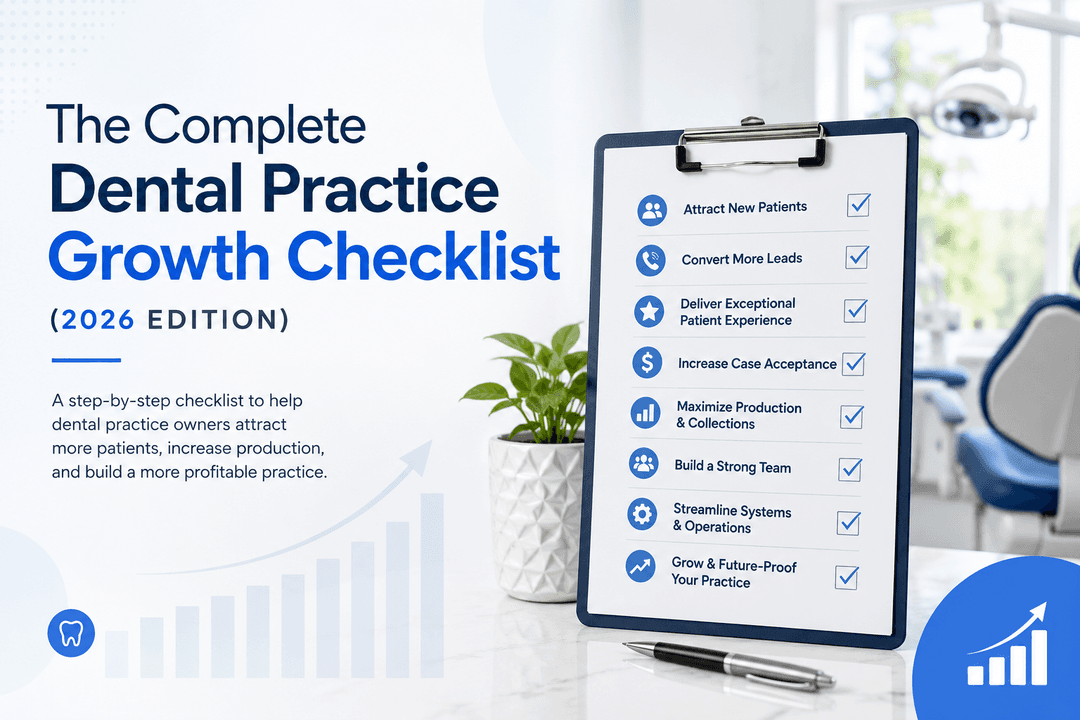
Patient Acquisition Playbook cover
Free Ebook — 2026 Edition

The Dental Practice Patient Acquisition Playbook

Proven strategies to fill your chair and grow revenue. Free download.

Download

The website was five years old with no individual service pages. It ranked for almost nothing locally. The Google Business Profile had 22 reviews and had not been updated in months.

Over four months, the practice made targeted changes:

  • Rebuilt the website with dedicated service pages and local SEO targeting

  • Optimized the Google Business Profile with weekly posts and fresh photos

  • Launched an automated post-appointment review request via text

  • Started a Google Ads campaign focused on implants and new patient exams

  • Published two educational blog posts per month to support SEO

By month four, the practice was receiving 63 new patient inquiries per month and booking an average of 45. Reviews grew from 22 to 87 with a 4.9-star average. The GBP moved into the Map Pack for six high-value local search terms.

The biggest driver was not ads in isolation. It was the combination of better visibility, more reviews, and a website that could actually convert the traffic it was receiving.

New Patient Growth Checklist for Dental Practices (2026)

Use this to find your gaps and decide where to focus first.

Google Business Profile

  • Profile fully completed with all services listed

  • 10 or more photos uploaded and updated regularly

  • Posting at least once per week

  • All reviews have a public response

  • Q&A section is populated with common questions

Website

  • Dedicated pages exist for every core service

  • City and neighborhood are built into page titles and copy

  • Site loads in under three seconds on mobile

  • Clear booking CTA is visible on every page

  • Schema markup is installed

Reviews

  • Post-appointment review request system is active

  • Automated text follow-up is configured

  • Team is trained to ask verbally at checkout

  • Practice has 50 or more Google reviews

Paid Advertising

  • Google Ads campaign is live for at least one high-value service

  • Landing pages match ad messaging

  • Call tracking is active

  • Ad performance is reviewed monthly

Content and Social

  • Practice posts to social media at least twice per week

  • Before-and-after content is being created

  • Blog is updated at least once per month

  • Email re-engagement campaign is running

What the Best-Performing Practices Do Differently

The practices that grow most predictably treat patient acquisition as a system, not a series of disconnected campaigns.

SEO drives organic traffic. Reviews build trust for that traffic. Ads capture patients who need an appointment now. The website converts all of it into booked appointments.

They also track the right numbers. Not website visits or social followers. New patient calls. Cost per booked appointment. Review rating trends. Landing page conversion rates.

Practices that lack this clarity often spend money without knowing what is working. That is the clearest sign that a connected system is missing.

Where to Start

You do not need to fix everything at once.

For most practices, the Google Business Profile is the best starting point. It is free, it has direct impact on local search visibility, and improvements can show results within four to eight weeks.

From there, layer in review acquisition, then website optimization, then paid ads once the foundation is solid.

If you are not sure where your practice has gaps, North Media works specifically with dental practices to audit visibility, identify what is underperforming, and build marketing systems focused on consistent, measurable new patient growth.

Frequently Asked Questions

How long does it take to get new patients from SEO?

Local SEO for dental practices typically shows meaningful results within three to six months. Google Business Profile improvements can show results faster, sometimes within four to eight weeks.

What is the fastest way to get new dental patients?

Google Ads targeting high-intent keywords delivers the fastest results because ads appear immediately for patients who are actively searching. Pairing ads with a strong landing page and call tracking makes results measurable from day one.

How many Google reviews does a dental practice need?

In most markets, 50 or more reviews with an average of 4.7 stars or higher is a competitive baseline. Practices in larger cities often need 100 or more to appear consistently in the Map Pack.

Is social media worth it for dental practices?

Social media alone rarely drives significant new patient volume. It works best as a trust-building layer on top of strong SEO and Google visibility.

What should a dental website include to convert visitors?

Clear service pages, local search optimization, fast mobile load times, prominent booking options, and visible reviews or trust signals on every key page.

How much should a dental practice spend on marketing?

Most growing practices invest between five and eight percent of monthly revenue back into marketing. The right number depends on market size, competition, and growth goals.

Free, no-pressure strategy call

Want results like the practices we write about?

Book a free strategy call and we'll show you exactly how to turn search demand into booked new patients.

Book a Strategy Call

Short on time? Chat with a dental marketing expert, no booking required.