
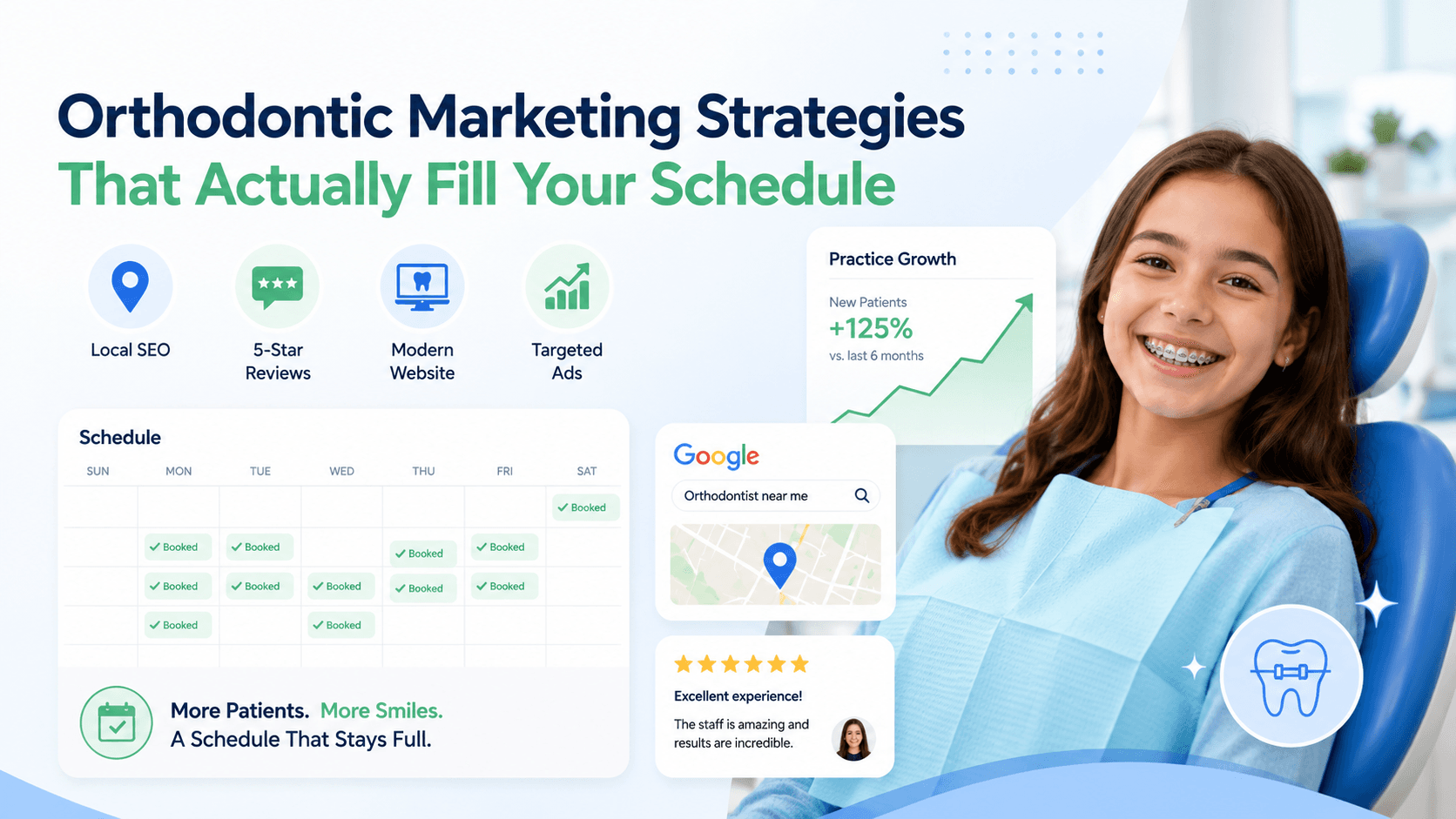
Most orthodontic practices are doing half of their marketing well. They run ads, post on social media, maybe even rank on Google. But they have no system for turning that visibility into booked consultations or treatment starts.
The result is inconsistent case flow, unpredictable revenue, and a practice that constantly chases new patients instead of consistently attracting them.
This guide covers the specific strategies that move the needle for orthodontic practices: local search visibility, consultation conversion, trust-building content, and the gaps most clinics overlook.
Why Orthodontic Marketing Is Different From General Dental Marketing
Orthodontic treatment is a considered purchase. A patient does not decide to start Invisalign or braces the same way they book a cleaning. The decision cycle is longer, often involves multiple household members, and requires a higher level of trust before any commitment is made.
General dental marketing tactics do not solve this. A strong Google Business Profile alone will not close a $5,000 case. A single ad will not replace a structured follow-up process.
Orthodontic marketing needs to work across three stages:
Visibility: Getting found by people actively searching for orthodontic treatment in your area
Trust: Giving prospects enough information and proof to feel confident choosing your practice
Conversion: Moving interested prospects into booked consultations, then into treatment starts
Most practices invest heavily in stage one and almost nothing in stages two and three.
According to Pew Research, 77% of patients search online before booking a healthcare appointment. For orthodontic practices, that means your digital presence is doing the first impression work long before anyone picks up the phone.
The Local Search Foundation Every Orthodontic Practice Needs
How Does Google Business Profile Optimization Work for Orthodontists?
Your Google Business Profile is often the first thing a prospective patient sees before they ever reach your website. An incomplete or poorly optimized profile loses cases before the conversation even starts.
Key elements to get right:
Set your primary category to "Orthodontist," not a general dental category
List every treatment you offer: braces, Invisalign, clear aligners, retainers, teen orthodontics, adult orthodontics
Add photos of your team, office, treatment rooms, and before-and-after cases (with patient consent)
Pre-populate your Q&A section with questions patients actually ask
Build review volume consistently; recency and volume both influence local ranking
One underused tactic: post consistently to your Google Business Profile using treatment-specific updates, patient milestones, or consultation offers. Most orthodontic practices leave this section completely empty.
Local SEO for Orthodontic Practices
Local SEO for orthodontics means ranking for searches like "orthodontist near me," "Invisalign provider in [city]," and "braces cost [city]." These are high-intent searches from people already in the decision process.
The pages that tend to rank for these terms share a few characteristics:
They are geographically specific, mentioning the city or neighborhood in headings and body copy
They answer the questions patients ask before booking: cost, process, duration, and financing options
They include trust signals: credentials, years in practice, cases completed, and technology used
They are linked to from relevant local and dental sources
A single generic "orthodontic services" page will not compete against practices that have built location-specific, question-answering content.
The Angles Most Orthodontic Practices Are Not Using
Adult Orthodontics as a Separate Market
Most orthodontic marketing is implicitly aimed at teens and parents. This leaves a significant segment underserved: adults who want straighter teeth but do not see themselves in traditional orthodontic messaging.
Adults have different concerns than teens:
Discretion: They want to know treatment will not be obvious at work
Timeline: They want the shortest effective duration
Fit with their life: Flexible appointments, payment options, and a practice environment that does not feel designed for teenagers
A dedicated landing page, targeted content, and specific ad messaging for adult orthodontics is one of the fastest ways to open a new patient segment without changing your services at all.
The Financing Conversation as a Marketing Asset
Orthodontic treatment cost is one of the top reasons prospects do not convert. Most practices bury their financing information or only mention it during the consultation.
Putting financing information front and center in your marketing lowers the barrier to booking significantly. Patients who know monthly payment options exist before the consultation are far more likely to show up and commit.
A dedicated financing page that answers specific questions ("Can I get braces with no credit check?" or "What does Invisalign cost per month?") serves both as SEO content and as a conversion tool. According to the American Association of Orthodontists, cost and payment flexibility are consistently among the top concerns patients raise before starting treatment.