
Most dental practices spend the bulk of their marketing budget trying to reach people who have never heard of them. That makes sense on the surface, but it often means ignoring the most valuable asset already sitting in your practice management software: your existing patient list.
These are people who already trust you, have already paid you, and have already chosen your clinic over every other option available to them. They are not a cold audience. They are warm, willing, and far easier to convert than a stranger seeing your ad for the first time.
This article is for practice owners who want to grow without always chasing new leads from scratch. I will walk you through exactly how to activate your patient list as a real marketing channel, with practical steps you can start this week.
Why Most Practices Leave This Channel Untouched
The average dental practice has hundreds, often thousands, of patient records sitting in their system. Very few of those patients receive consistent, intentional communication outside of appointment reminders.
There are three common reasons practices leave this channel untouched:
The front desk team is stretched thin and there is no system in place
The practice does not have a clear strategy for what to say or when
The assumption that patients will come back on their own when they are ready
That last one is the most expensive assumption in dental marketing. Patients do not always come back on their own. Life gets busy, they forget, they drift to a closer clinic, or they just never get around to booking. A small, consistent effort from your end changes that significantly.
"Most practices are sitting on a goldmine they have not touched. The patients who already know you, trust you, and have paid you before are your fastest path to filling the schedule without spending more on ads."
What Your Patient List Can Actually Do For You
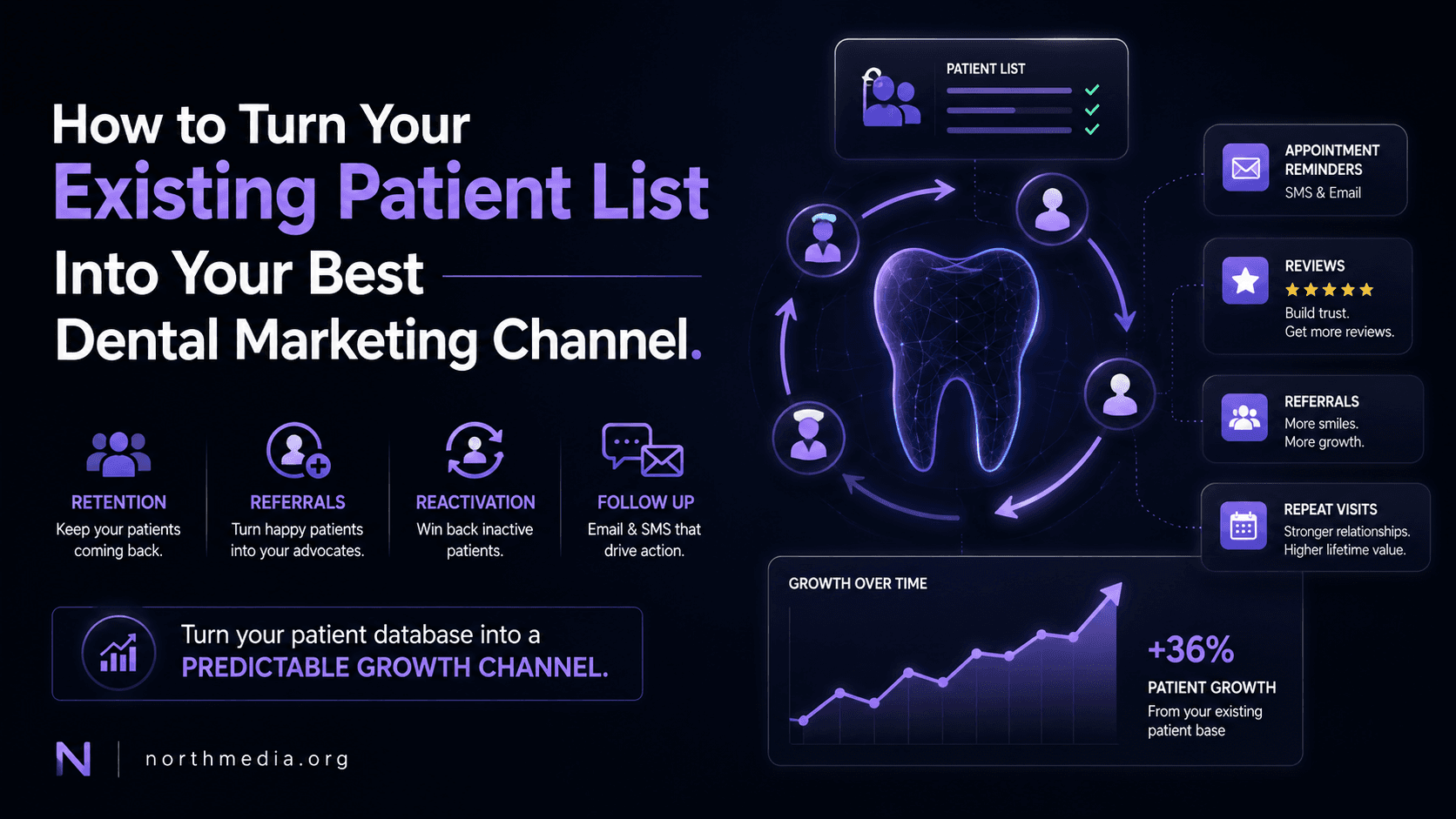
Before getting into the how, it is worth being clear about what you are actually trying to achieve. Your existing patient list can do three things that no paid ad campaign can do as efficiently:
Reactivate lapsed patients who have not been in for 12 months or more
Generate referrals by prompting happy patients to send friends and family
Build your Google review profile by asking satisfied patients at the right moment
Each of these outcomes costs a fraction of what it takes to acquire a brand new patient through paid advertising. According to research from Bain and Company, acquiring a new customer can cost five to seven times more than retaining an existing one. That gap is even more pronounced in healthcare, where trust is the primary driver of patient choice.
The return on effort here is genuinely one of the highest available to a practice owner.
How to Reactivate Lapsed Patients
A lapsed patient is anyone who has not visited in 12 months or longer. Most practices have far more of these than they realize.
Step 1: Pull the list. Run a report in your practice management system filtered by last appointment date. Start with patients who have not been in for 12 to 24 months. These are your warmest lapsed contacts because the relationship is recent enough to still feel relevant.
Step 2: Segment by treatment history. Patients who were mid-way through a treatment plan are especially worth contacting. There is unfinished business, and that gives you a natural reason to reach out.
Step 3: Send a direct, personal message. This does not need to be a polished campaign. A simple SMS or email works well. Something like: "Hi [Name], we noticed it has been a while since your last visit and wanted to check in. We have some availability coming up if you would like to get your next check-up booked." Friendly, not salesy, and easy for them to act on.
Step 4: Follow up once. If you do not hear back after a week, send one more message. After that, move on. Two touches is the right amount. Anything more feels pushy.
The key point here is that you are not convincing them to become a patient. They already are one. You are just removing the friction of them having to remember to call you.
How to Generate More Referrals From Happy Patients
Referrals from existing patients are one of the highest-trust forms of new patient acquisition available. A person who walks in because their friend recommended you is already sold on your practice before they even arrive.
Most practices get referrals passively. Patients mention them when the subject comes up naturally. The opportunity is to make that happen more often by being intentional about it.
What actually works:
Ask at the right moment. The best time to ask for a referral is right after a positive experience: at checkout, after a treatment they are clearly happy with, or when they volunteer that they enjoyed the visit. Train your team to recognize those moments.
Make it easy. Give them a way to refer that requires almost no effort. A referral card is fine, but a short message they can forward to a friend is better.
Consider a simple thank-you. A small credit toward their next hygiene visit or a handwritten note goes a long way. It does not need to be expensive. It needs to feel genuine.
Respond to referred patients quickly. If someone calls or books because a friend sent them, prioritize that contact. A slow response kills the referral before it starts.
The referral flywheel takes a few weeks to get moving, but once it is active, it runs with minimal effort.