
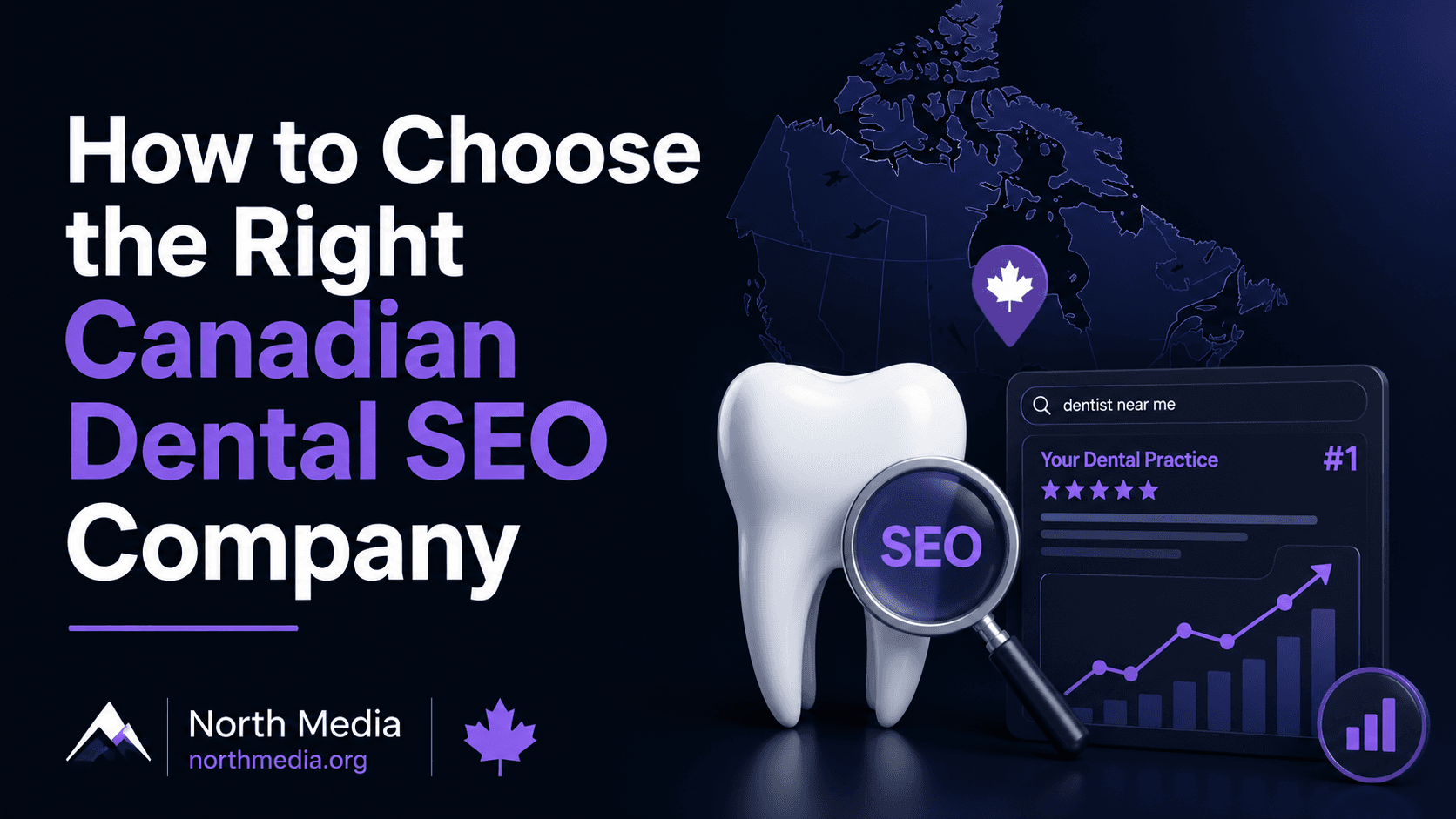
A dental SEO company helps dental practices rank higher on Google, attract more local patients, and build consistent visibility in local search results. But not every agency that claims dental SEO experience actually delivers it.
The right partner understands how patients search for dental services, how Google evaluates local businesses, and what separates a clinic that dominates its area from one that stays invisible.
This guide covers the specific criteria you should use to evaluate any Canadian dental SEO company before signing a contract.
Why Dental SEO Requires a Specialized Approach
Dental SEO is not the same as general SEO. Canadian clinics compete in highly localized markets where Google's local algorithm, proximity signals, and review volume all influence ranking.
Search intent matters here, too. Patients searching "emergency dentist Toronto" or "family dentist near me" are ready to book, not browse. According to Google, 76% of people who search for something nearby on their smartphone visit a related business within a day. SEO that fails to capture that appointment-ready traffic misses the most valuable opportunity a dental practice has.
Provincial advertising regulations also affect what clinics can say in their marketing. An agency without dental industry knowledge may create content that introduces compliance risk.
5 Criteria That Separate Dental-Specific SEO from Generic Agencies
1. Demonstrated Experience with Dental Practices
Ask the agency for dental-specific case studies, not general portfolio work. Results for a home services company or e-commerce brand do not translate to a dental clinic.
Look for evidence they understand:
Google Business Profile optimization for dental clinics
Local pack ranking strategies for single-location and multi-location setups
Service page content strategy, not just blog publishing
Patient acquisition metrics, not just traffic numbers
2. Local SEO Depth, Not Just On-Page Basics
Local SEO for Canadian dental practices involves more than adding a city name to a page title. The agency should clearly explain their approach to:
Google Business Profile management and ongoing optimization
Citation building across Canadian directories
Review generation strategies tied to patient experience
NAP (name, address, phone) consistency across all platforms
Geo-targeted landing pages for clinics serving multiple neighborhoods
Generic on-page SEO alone will not move a dental practice up the local pack. Local visibility requires consistent, ongoing management.
3. Transparent Reporting Tied to Patient Acquisition
An agency that only reports on keyword rankings or total organic traffic is measuring the wrong things. According to BrightLocal's 2026 Local Consumer Review Survey, 98% of consumers used the internet to find local businesses in the past year, which means local visibility directly influences whether your phone rings.
Ask any agency what metrics they track and report. The right agency focuses on:
New patient calls from organic search
Direct link to revenue
Google Business Profile views and actions
Local visibility signal
Appointment form submissions
Conversion performance
High-intent service keywords
Quality of traffic, not just volumeMonth-over-month lead trends
Growth trajectory
Avoid any agency that cannot connect SEO activity to actual patient inquiries.
4. Website Performance Knowledge
SEO does not exist independently from the website. A dental SEO company should be able to identify and resolve issues that affect both rankings and conversions, including:
Page speed and Core Web Vitals
Mobile-first design for patients searching on phones
Clear calls to action on every service page
Schema markup for dental services
Technical crawlability and indexing health
If an agency focuses purely on content and ignores technical and conversion elements, a clinic may rank but still fail to convert visitors into appointments.
5. Clear Communication and Realistic Timelines
SEO results for dental practices typically become measurable within three to six months. Any agency promising first-page results in weeks is either misleading you or relying on short-term tactics that carry long-term risk.